Tag: Africa’s call to scale

We must listen now to Africa’s call to scale or fail

Everyone likes a call to action. The theme of this year’s Africa CEO Forum struck a chord as it suggests urgency. We have done decades of talking, let’s get on with it. 

It was given heft by where the conference was held. Kigali is an incredibly impressive city and I am blown away by the levels of activity every time I visit. We spent a day filming at the city’s Golf Course with three people I knew would have powerful insights to share – Hortense Mudenge, CEO of Kigali IFC; Kinapaly Coulibaly, Managing Director of BNETD and Diane Karusisi, CEO of Bank of Kigali. Over the next few months, I will be sharing these interviews and they are a must-watch as these are the people scaling in Africa – and they’ll share how. 

Gateway to Africa

From where we sat, we could see new developments beyond the greens – one will be a hospital and others mixed spaces for work and living. From the moment the country decided to move from a largely agriculture-driven economy to one built around knowledge services, the growth has been steady. As the sun went down, I could see golfers but also delegates for a Rwandan/ E.U. summit talking on the deck. People are calling Rwanda the gateway to Africa – this is why. 

From the moment the country decided to move from a largely agriculture-driven economy to one built around knowledge services, the growth has been steady.

A day later and it was another country in the spotlight – Cote d’Ivoire. Following many months of collaboration, we brought together Banque Ouest Africaine de Développement, BNETD-Bureau National d’Études Techniques et de Développement, and the Government of Côte d’Ivoire around a shared ambition: accelerating the delivery of BOAD’s Djoliba Strategic Plan.

Institutions and Infrastructure

At the heart of the agreement is the positioning of BNETD as the technical delivery arm supporting the execution of the plan’s infrastructure ambitions – a 1,709.35 billion FCFA investment programme aimed at shaping the next generation of infrastructure across the continent.

What both this deal and what I saw in Rwanda share is an intense focus on sustainability and resilience. In Rwanda, this is being driven, as the IMF noted in December (PDF), by creating institutional frameworks honing in on gender equality and climate integration – two of the country’s biggest concerns. Institutions – or institutional change in this case – are one of the four pillars of economic transformation. 

“Infrastructure is the starting point for any development.”

The BNETD launch focused on another – Infrastructure. As HE Jean de Dieu Uwihanganye, the Rwandan Minister of State for Infrastructure, said at the event at ACF2026: “Infrastructure is the starting point for any development.” He added: “We talk about it as politicians for ages, which is always disappointing for citizens.” Instead, he argued, leaders need to start any conversation about transformation with the impact it will have – and be able to back this up. Not only does this turn attitudes from apathy to excitement, but it provides the impetus for change. Three words sum this up – agility, trust and impact.

From strategy to reality

Coulibaly shared the magic formula for making sure that infrastructure projects go from blueprint to reality: they must be cross-domain/ cross-ministry; they should be built using strategic partnerships; and then driven by permanent, multi-disciplinary teams. 

“We have everything lined up. We now just need to deliver it for our people.”

This means, in practice, bringing multiple experts together but all with a shared vision. This is what I have been writing about for years – create a compelling narrative, sharing it with honesty and integrity; and bringing your people along with you. This is how complex change happens; and is sustained. 

We can keep on talking about Africa’s infrastructure funding gap forever, or, as de Dieu stated, we can mobilise Africa’s resources now. As he said: “We have everything lined up. We now just need to deliver it for our people.”

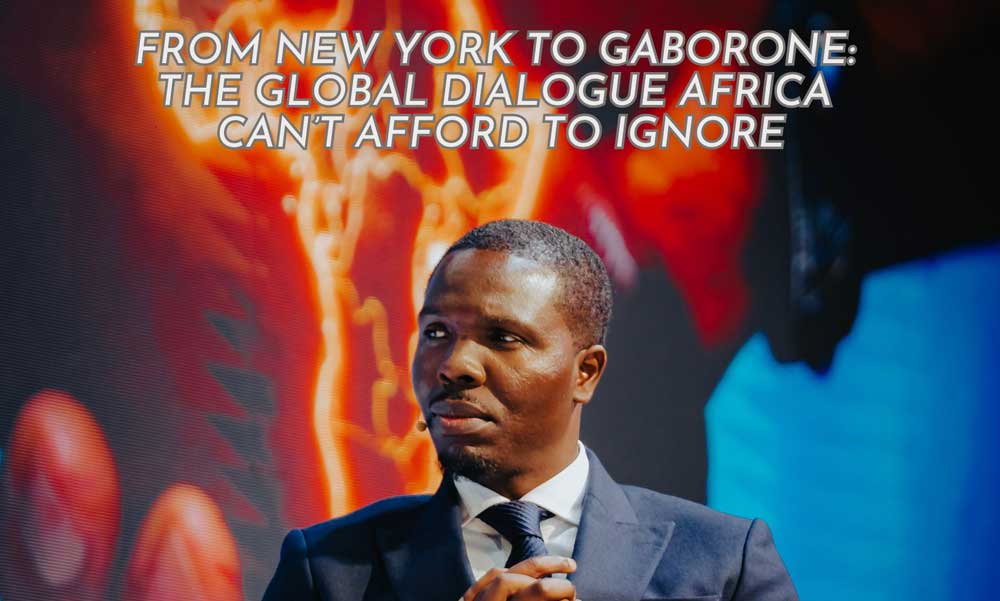
From New York to Gaborone: Why Africa can’t grow without resilient infrastructure

It always amazes me when conversations started in one room in one country on one continent seem to seamlessly carry on in another room, in another country and, in this case, on another continent. 

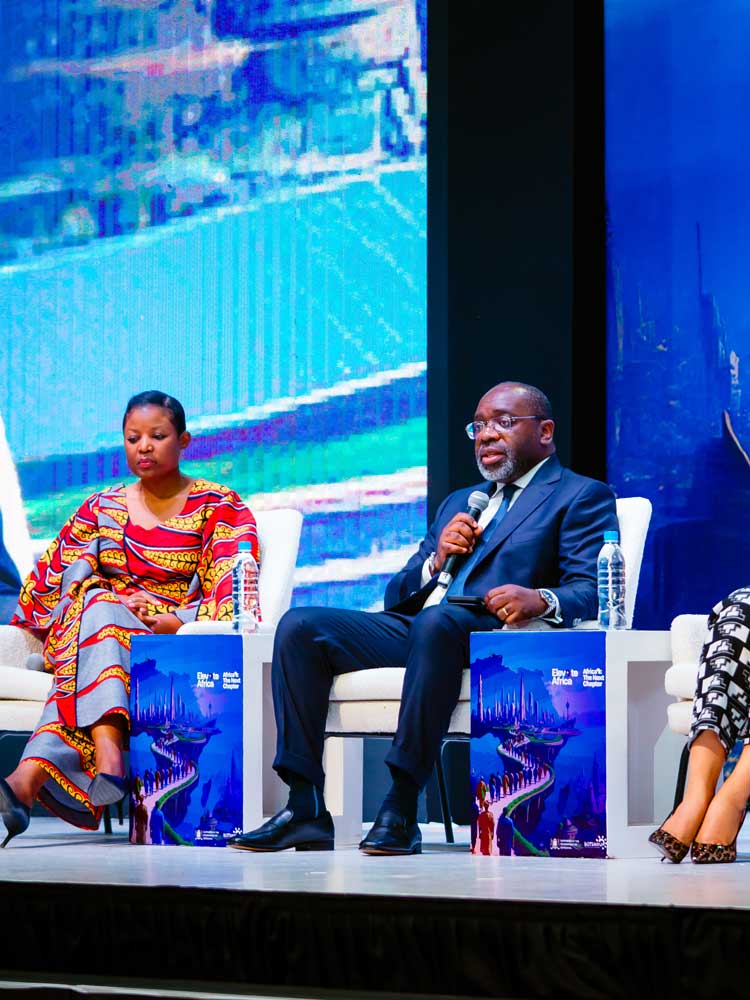
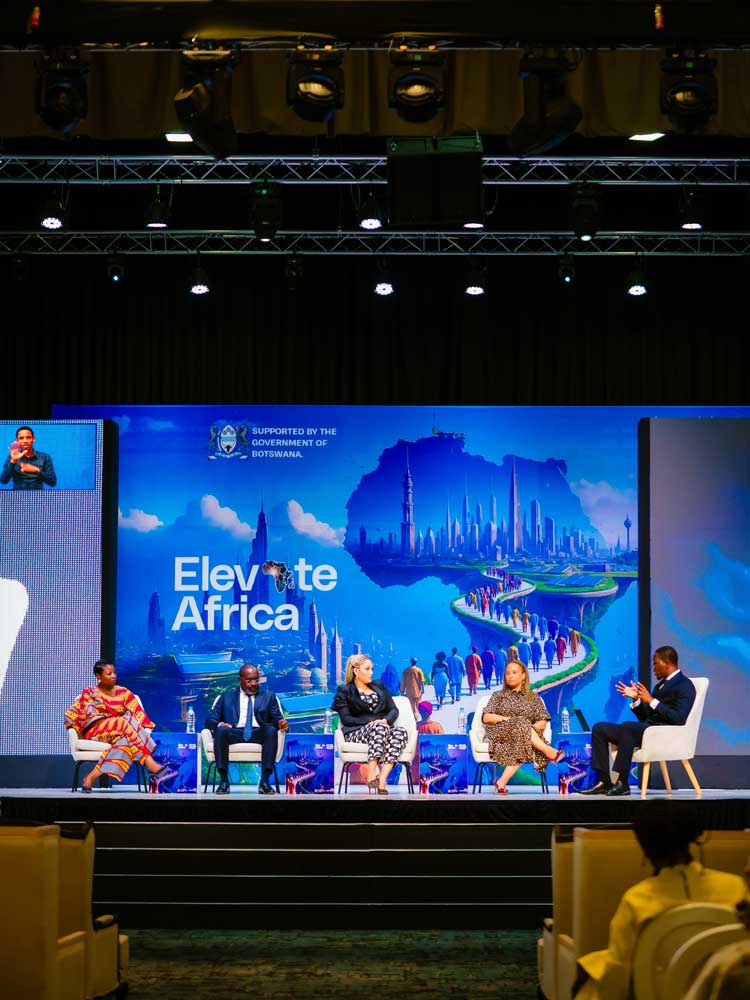
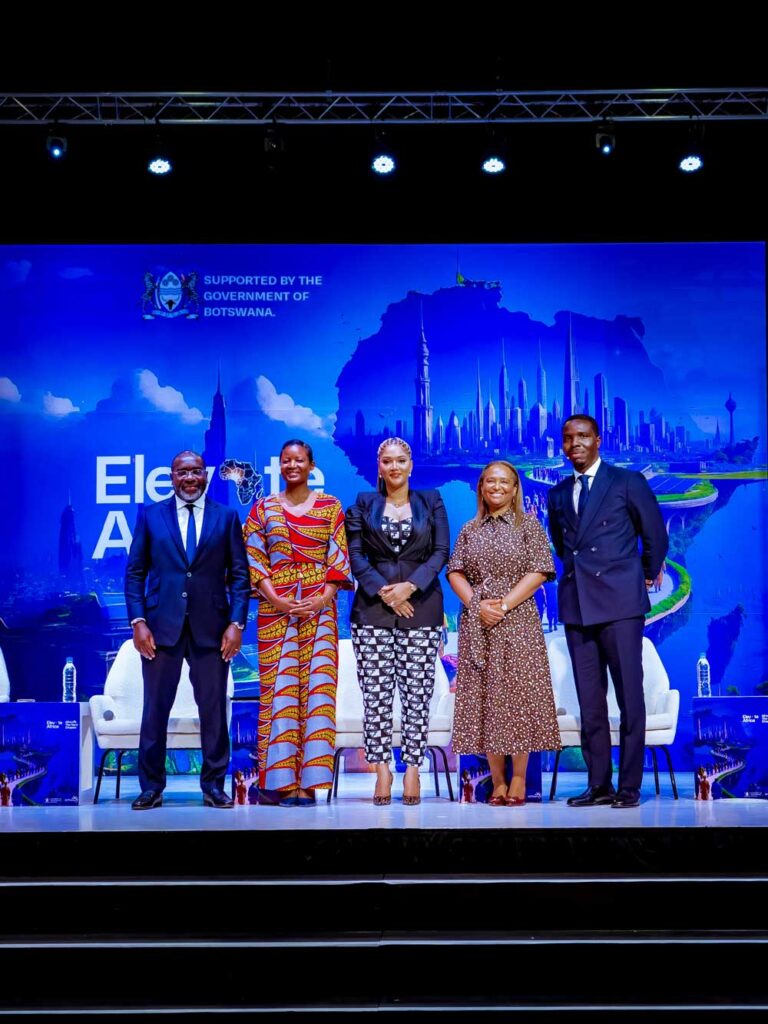
At Elevate Africa Convening, I was privileged to chair a high-level panel that felt both timely and poignant. I was joined by the CEO of BNETD, Kinapara Coulibaly, Zurina Saban, General Counsel and Partner at Africa50, Kuso Kamwambi, Head of the Presidential Delivery Unit of Zambia, and Elizabeth Jack-Rich, CEO of Elin Group – all very accomplished leaders in their professional spheres.

From left to right: Kinapara Coulibaly, Kuso Kamwambi, Elizabeth Jack-Rich, Zurina Saban, and Peter J Jolopamo.

As at Concordia in New York, which ran alongside the UN General Assembly, we explored a fundamental pillar of the economic growth theory – sustainable infrastructure as a catalyst for economic transformation. 

The foundations to build transformation upon

Infrastructure is often called the backbone of economic transformation because it provides the physical and organisational foundations that let economies shift from low-productivity to high-productivity activities. 

 “Infrastructure is often called the backbone of economic transformation”

Africa has gargantuan task ahead of it. As Coulibaly said in his keynote speech, nearly 70% of the infrastructure the continent will need by 2040 has not yet been built. He further highlighted during our plenary discussion that infrastructure development is not just a physical or economic imperative – it is the enabling foundation for human capital, innovation, and productivity growth.

The net benefit of investing in more resilient infrastructure is clear – the economics make sense – with $4 in benefit for each $1 invested. Yet as Saban highlighted, despite a global funding allocation of nearly $3 trillion to the infrastructure agenda, a mere 3% was currently allocated to Africa.

The African finance gap

I underscored this point during our plenary session, referencing The African Economic Outlook (AEO) 2024 report published by AfDB (PDF), which estimates that to accelerate Africa’s structural transformation, the continent needs to close an annual financing gap of $402.2 billion (about 13.7% of its projected 2024 GDP) by 2030. 

Coulibaly and Saban challenged financiers and institutional capital to do more, highlighting the need for smarter de-risking mechanisms, greater transparency, or more innovative blended finance models.

Interrogating standards and governance

But financing is only one of the bottlenecks in Africa’s infrastructure story: execution and governance also need to be examined. The panellists noted that while many projects have been completed, execution often falls short of the scale, quality, or resilience needed to deliver lasting impact. 

Kamwambi argued that there was also a need for reforms and agility in governance to ensure that policies were enabling rather than limiting – to drive the continent’s transformation agenda. This was further echoed by Jack-Rich – a pioneer and titan of industry rewriting the narrative of Africa’s capability and competency. Elin Air hit the history books in June by completing the first 7,800 landing check for a Bombardier Challenger CL604 aircraft entirely in Nigeria. It was the first time this level of maintenance had been achieved anywhere in Africa. 

 “There is a need for reforms and agility in governance to ensure that policies were enabling rather than limiting.”

For Jack-Rich, it was a moment that countered the stigma that anything done in Nigeria is not professionally done. As she told the press: “Completing this check is not just a technical achievement, it is a statement of endless possibility.”

Encouraging more innovation

Jack-Rich acknowledged the strong collaboration her organisation has enjoyed with regulators and policymakers, but highlighted that simplifying regulatory processes and directing funding more strategically could further unlock infrastructure growth across the continent. This would encourage more innovation if policies were infrastructure-enabling and unleash even more entrepreneurial spirits on the continent.

The continent must address all three issues with a matter of urgency not least because it is this infrastructure that will support growth even as Africa bears the brunt of global climate change. These impacts are projected to erode 2–4% of Africa’s GDP each year by 2040. Inaction on the continent and beyond is not an option as it will lock Africa into a low-growth, high-vulnerability trap, where the cost of recovery continually outweighs the benefits of prevention.

While there will never be enough time for these necessary discussions, each panellist left with a single continental commitment – taking ownership and accountability in their role in the ecosystem, either as policymakers, financial partners, technical partners and leaders of industry. The power of the words shared was evident – we need to increase collaboration and it starts with dialogues like this. And dialogue must be followed by action. 

Africa is rising; and Asia is supporting its ascent 

Sitting at an event in Hong Kong this week, I declared that Africa’s time is now. This isn’t hyperbole. Chatham House writes that Africa will be the second-fastest-growing region globally this year. It adds: “The African Development Bank projects an annual economic growth rate of 4.3 per cent, up from 3.7 per cent last year”. The upward trajectory continues despite rocky geopolitical conditions, including the impact of climate change, war and economic wars. 

Looking to the future, the possibilities become awe-inspiring. By the end of this century, Africa will be home to four billion people and Asia to five billion. This means that these continents will account for nine out of 11 billion people on Earth. This, coupled with innovation and action, will mean that the bilateral partnership between Asia and Africa will define our future, and not for decades but centuries. 

A meeting of minds 

I wrote before that the future of markets, innovation, and growth will not be written in Washington, Brussels, or London, but in Kigali, Nairobi, Hong Kong, Singapore, and Jakarta. What I have seen and heard in Hong Kong this week has absolutely confirmed this to me. 

“The bilateral partnership between Asia and Africa will define our future.” 

Our host and guest of honour represented the two continents. Raffles Family Office group CEO, Chi Man Kwan, and The Honourable Minister, Yusuf Murangwa, Minister of Finance and Economic Planning of Rwanda, opened the roundtable discussion. The event brought together CEOs and business leaders from Asia’s banking and wealth, real estate and hospitality sectors with some of Africa’s brightest entrepreneurial minds. 

Our focus was the unlocking of Africa’s potential and we grounded high level concepts in reality with Rwanda as our case study. This is a country, which is recognised as a hub of economic growth and innovation in Africa. The World Bank reports that Rwanda’s real GDP grew by 8.9% in 2024, beating the previous year’s growth rate of 8.2%. 

Small but Mighty Rwanda 

Hortense Mudenge, CEO of the Kigali International Financial Centre, walked the group through Rwanda’s Vision 2050 – ‘the land of a thousand hills’ – highlighting the policies that have made Rwanda a high-interest geography for investors and the priorities of the plan. 

Make no mistake, Rwanda is a small but mighty country – small in geographical and population size, but mighty in ambition – leading the ‘Africa Rising’ charge. As Minister Murangwa stated, Rwanda has one clear ambition: to become the facilitator in terms of access to the region, driven by credibility in partnership, and underpinned by uncompromising stability in governance and institutions. Many already view it as the rising ‘Singapore of Africa’ – and these claims certainly aren’t far-fetched. 

The discussion explored multiple components, from investment incentives to exciting collaborations like being the first African country to host F1 grand prix, from technology to connectivity and being accelerator for economic development. 

The key takeaways 

For me, though, there were three fundamental takeaways. Firstly, the degree of exposure and awareness about the potential of Africa varied greatly. Some of the senior executives simply didn’t have an idea of the potential and future size of the market, while others had led operations on the continent and shared their experiences. It reminded me of one of the conclusions that came out of a similar roundtable at Concordia in NYC last month. There was consensus that Africa needed to take control of the Africa story narrative – people simply do not know what they don’t know, and we can’t continue to let narratives built on negative facts propagate. 

“Africa needs to take control of the Africa story narrative.” 

This is a mission Elevate Africa, is actively pushing – with one of their programmatic pillars being reshaping Africa’s self-image and global perception. But it’s a marathon not a sprint – as noted by Dennis Chiu, the Executive Director of Far East Consortium International Ltd, who committed, at the end of the dialogue, to visit Rwanda in the near future and learn more about the possibilities on the continent. That one commitment confirmed that dialogues do change narratives. 

Secondly, one of the participants reminded us of the journey of China – which started at a lower base compared to Rwanda’s current GDP per capita – and is now the second largest economy in world (and by some metrics joint first with the US). Everything is a journey, but every journey also requires focus. You have to play the long game but with clarity. Rwanda has a huge opportunity to set the financial infrastructure for the rest of the continent. 

Chi-Man Kwan: “Don’t just talk about the future – let’s create it together.” 

Finally, while the opportunity for Africa remains massive, it requires the right partnerships. As I reminded the group, the bilateral continental relationship between Africa and Asia will be the most important and most defining for the next century. 

History is being written and it starts with dialogues like those I was honoured to chair at this event. I look forward to participating in and shaping more dialogues like this, and progressing insights to actions. In the words of Chi-Man Kwan: “Don’t just talk about the future – let’s create it together.”